
Diesel generators are powerful machines that can provide prime or standby electricity in a variety of settings. They work by turning diesel fuel into electricity, providing homes and businesses with a reliable on-site or off-grid power source.
Aside from peace of mind, diesel generators offer a range of benefits, including fuel efficiency, durability, and versatility. In this guide, we’ll provide a complete overview of diesel-powered generators, including how they work, the different types available, and the pros and cons.
Diesel generators work by burning diesel fuel to create electricity. The diesel engine powers your generator, turning mechanical energy into electrical energy through combustion. Once the AC electricity is generated, it can power electrical equipment, lighting, and off-grid machinery.
Generators are vital pieces of equipment for businesses of all sizes. They maintain operations when you lose access to your main power supply. From industrial applications to commercial businesses and off-grid construction sites, investing in a diesel generator can reduce downtime costs.
While many people use a diesel generator for their business, they can also be beneficial for homes as they ensure you have ongoing access to electricity.

Diesel generators are used for both prime and backup power in diverse settings. Let’s take a look at where they’re more commonly used.
Some areas are more prone to power outages than others, which can be a pain for homeowners. From being unable to complete work to worrying about wasted food, the costs of a blackout can be significant.
Diesel generators automatically switch on when you lose access to an electricity supply, ensuring you don’t have to worry about power cuts disrupting your life.
You can choose between a variety of residential generators, including models that will power the essentials or backup power for your entire home.
Commercial businesses rely on diesel generators significantly as they ensure that operations can continue. Retail stores rely on customers being able to shop as and when needed, while offices can face extensive losses during power outages.
Data centres can experience critical losses during an outage and compromise personal information, but diesel generators can ensure compliance and prevent security breaches.
Investing in data centre generators protects critical information and prevents expensive data breaches.
Large manufacturing plants, factories, and oil rigs can benefit from large diesel generators, as they can power heavy machinery and entire production lines. Agricultural operations also use them – especially for off-grid applications.
For example, agricultural generators can provide power for livestock feeding systems and irrigation systems, while industrial generators will power large-scale options.
Hospitals need diesel generators for standby power, as any outages can threaten patients’ lives. Generators power vital life-saving equipment and ensure the hospital remains operational.
However, it’s also important to remember that portable generators are beneficial for emergency services that don’t have access to a main electricity supply.
Choosing the right hospital generator is imperative to ensuring that your operations can continue, while emergency generators power vital equipment.
Businesses in rural areas, such as construction sites and military camps, use portable generators to power tools, lighting, and other essential equipment. These generators are often smaller than models that provide standby power, but they can still support a range of operations.
Diesel generators can seem complex at first due to their multiple components. However, once you understand how these components work, you’ll see that each provides power for operations of all scales.
Here are the most important components of a diesel generator:
If you’d like to see how a generator works in more detail, please feel free to take a look at our helpful guide.
So, now you know more about diesel generators, it’s time to reveal the most popular types available. The one you choose should reflect your immediate and long-term power needs:
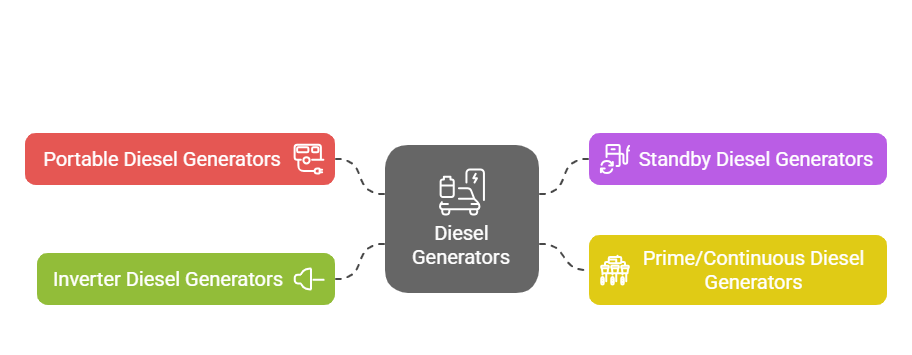
Whether you’re interested in silent diesel generators, portable models, inverters, or anything else, it’s essential to understand the pros and cons before investing in one. Next, we’ll explore the key advantages and disadvantages of diesel generators.
| Pros | Cons |
| Fuel Efficiency | Initial Investment |
| Longevity | Installation Complexities |
| Performance | Noise Levels |
| Low Operating Costs | Maintenance Needs |
| Versatility | |
| Long Term Savings |
Investing in a diesel generator gives you access to a reliable power supply when you need it – but we get that it’s a big decision. That’s why it’s essential to weigh up the pros and cons while also factoring in the long-term advantages of generators.
Solent Power is an authorised distributor of diesel generators, and we stock models from the UK’s most reputable manufacturers. We’re always here to lend our expertise and help you find a suitable model for your needs.
Please get in touch with our generator sales team today for more information.
Single-phase diesel generators use one AC waveform, making them ideal for small-scale applications with lower power needs. A three-phase generator uses three AC waveforms to deliver power, which can offer more stability in industrial or commercial settings.
If you need to power heavy-duty machinery or have a large commercial building, a three-phase generator will offer more value for money in the long run.
There’s no simple answer here, as generators come in various sizes. You’ll need to calculate the average wattage of the items you’ll need to power, then choose a generator that is large enough to support them.
Our helpful generator size guide can help you find the best solution for your needs.
Yes, you can. But it’s essential to consider whether you’re getting long-term value. Cheap generators may be prone to faults, and you could end up spending more on repair costs. If you’d like to buy a used generator, choose a reputable seller and do your research.




Solent Power Ltd (Company Number 12622565) is a company registered in England and Wales. Our registered office is located at Station yard, Bowes Hill, Rowlands Castle PO9 6BP. VAT No. 363504018