
Diesel generators are powerful machines that give homes and businesses a reliable backup power supply by turning fuel into electrical energy. They offer home and business owners peace of mind and can also reduce operational downtime – making them smart investments.
Knowing how a diesel generator works can help you decide whether it can benefit your residential or commercial power needs. In this guide, we’ll reveal everything you need to know about these machines, including their main function, components, and advantages.
But first, if you’re new to diesel generators, we recommend reading our diesel generators beginner’s guide.

Diesel generators transform diesel fuel into electrical energy through the following process:
1. Fuel Combustion: Generators have compression chambers that ignite the diesel fuel. Once the fuel is ignited, it creates a combustion reaction, releasing energy.
2. Mechanical Energy Production: The combustion process creates a significant amount of force that moves the engine’s pistons, which are connected to a crankshaft. When this movement happens, the released energy turns into mechanical energy, preparing your generator for electricity production.
3. Electrical Production: The pistons will transfer mechanical energy to the alternator, which then provides electrical power.
This process is what makes diesel generators so effective for generating electricity.
Diesel generators can seem complex because they have a range of components. However, every component has a purpose and plays a key role in your generator’s operation.
The diesel engine is the hub of your generator, as it’s responsible for providing power through a combustion process. Engines come in all sizes, and the one you choose should represent your power needs.
For example, a small home will generate enough power with a standard residential generator, but large-scale industrial operations will need a larger generator engine.
The alternator is a crucial component that converts mechanical energy into electrical energy using electromagnetic induction. It does this through a rotor—a component that rotates mechanical energy—using a magnetic field.
When the rotor spins within the generator’s stator, it creates AC (alternating current), which powers electrical systems. The alternator is crucial to your generator’s operation, as poor quality or damaged alternators will compromise the generator’s voltage stability.
The fuel system provides the engine with the diesel it needs to initiate the combustion process. As with engines, fuel tanks come in different sizes, so the amount of diesel the fuel tank can hold will impact the generator’s output.
Fuel lines transport diesel to the engine, maintaining consistent pressure, while filters ensure a clean combustion process.
A poorly maintained or contaminated fuel system can limit your generator’s electricity generation and damage the engine. That’s why regularly assessing fuel quality is a vital part of generator maintenance.
Just like cars have cooling and exhaust systems, generators need them to prevent the engine from overheating. The cooling system collects excess heat and removes it from the generator using a heat exchanger.
Exhaust systems are vital for health and safety, as they divert nitrogen oxide and carbon monoxide from the generator and surrounding area. If these systems experience damage of any kind, your generator will be more vulnerable to damage.
Diesel generators generate considerable heat during operation, which must be controlled to prevent overheating and ensure safe performance.
The control panel is basically mission control for your generator, and advanced models let you configure operational outputs to suit your needs. It also focuses on safety, as the panel will monitor your generator’s fuel levels, current, frequency and voltage.
You can set alarms that send instant alerts when the generator is having an issue, ensuring health and safety. Many people also connect their generators with external systems for remote monitoring and configuration.
Voltage regulators are complex components, so we’ll keep it simple: They moderate your generator’s output to ensure that the systems it’s powering receive a stable power supply.
Without regulators, the generator wouldn’t be able to maintain consistent power levels, which can damage electrical equipment and lead to overheating. You’ll notice that most generators have automatic shutdown features, which trigger when the voltage isn’t stable.
Every diesel engine needs a battery charger, as it powers the starter motor and ensures your generator’s ready to go. Charging the battery regularly ensures the engine will start as and when needed.
So, now that you know the main components of diesel generators, it’s time to reveal how they work. Understanding the step-by-step process is integral to identifying potential issues with the generator and ensuring your electrical equipment receives the power it needs.
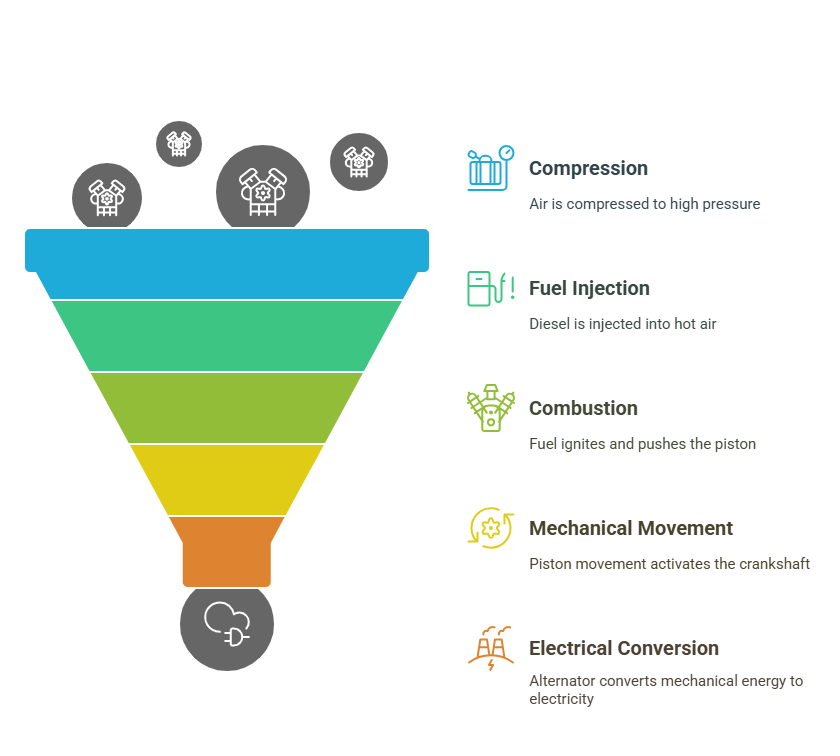
1. Air Intake and Compression: The process starts by pulling in air and compressing it inside the engine cylinder. Diesel generators can achieve much higher pressures than a standard petrol engine.
2. Fuel Injection and Combustion: Next, diesel is injected into hot air, which ignites the diesel and causes combustion without needing a spark plug. As the process happens in a controlled environment, it’s usually safe.
3. Mechanical Movement of Engine Pistons: The combustion then pushes the piston downwards, activating the crankshaft. This action converts the energy generated from combustion into mechanical movement.
4. Alternator Conversion to Electrical Energy: The alternator’s rotor will automatically rotate through a magnetic field, creating an electrical current.
5. Power Regulation and Delivery: All generators have control systems to regulate the electric current flow and deliver consistent power to your equipment and lighting systems.
When you choose generators with diesel engines, you can look forward to long-term peace of mind. These robust machines are capable of powering operations of all sizes and are known for their long-term reliability.
Let’s take a look at the main advantages of diesel generators.
Diesel fuel is more environmentally friendly than petrol, thanks to its slower burn time. When you fill-up a diesel generator, it will last a lot longer than petrol models, reducing refuelling frequency.
So, when it comes to residential, commercial or industrial applications, these generators will offer long-term peace of mind.
Opting for diesel portable generators can also be beneficial for emergency services or off-grid operations, where on-site refuelling is tricky.
Fuel economy is important for two reasons: sustainability and affordability. Diesel engine generators’ high efficiency levels mean that they can convert fuel into more electricity than a petrol model. Thanks to diesel’s ability to convert more fuel into electrical energy, you’ll also get more bang for your buck.
On average, a litre of diesel produces 9.7 kWh of energy—significantly higher than petrol’s 8.8 kWh. Many diesel generators are also compatible with red fuel, a highly affordable solution. When it comes to numbers, diesel offers higher long-term savings than petrol.
You’ll notice that most heavy-duty and industrial generators use diesel engines. Why? Because they’re known for their robust design and reliable performance. A diesel generator can handle demanding conditions, and the components are built to last.
They don’t need spark plugs and have less moving components than petrol generators, making them easier to maintain. While professional services and maintenance are still crucial for health and safety, the process is usually less intensive than with petrol engines.
| Feature | Diesel Generator | Petrol Generator |
|---|---|---|
| Ignition Type | Compression ignition – doesn’t require a spark plug. | Spark ignition |
| Fuel Efficiency | High levels of efficiency for long run-times, less expensive to refuel, turns more petrol into electrical energy. | Less efficient than diesel – especially under load |
| Power Output | Suited for large-scale power needs, including commercial and industrial use. | Lower power output for small-scale needs. |
| Maintenance | Less frequent, heavy-duty components. | Requires frequent servicing. |
| Typical Use Cases | Commercial, industrial and large residential properties that need reliable standby power. | Home backup, recreational, portable use (e.g. small construction sites). |
An electric generator powered by diesel can last for decades, but maintenance is key. Taking the time to perform a few simple tasks (or investing in a professional service) ensures that your generator will continue to provide a reliable electrical output when you need it most.
We’re about to cover the key maintenance tasks, but our complete generator maintenance checklist can help you stay on track.
Adhering to a consistent maintenance schedule ensures that your generator continues to perform. General maintenance tasks include changing the oil, replacing filters, and monitoring the output voltage.
You should aim for annual inspections, but if you use the generator frequently, arranging a professional generator service and maintenance every six months is best.
You should regularly assess your diesel fuel, as it can degrade over time. Safe storage—including placing it in sealed containers and checking for contamination—is essential.
If you’ll store diesel fuel for a long time, opting for a specialist storage tank can drastically reduce the risks of water and microbial growth. Additives can also preserve fuel quality and ensure the generator can power appliances and equipment safely.
A generator with low coolant levels is more at risk of overheating, which can damage the device itself and your electrical equipment. Check your coolant levels frequently and top them up if needed. It’s a quick task that could save you thousands of pounds.
You should also maintain adequate lubrication to protect the internal components and reduce wear.
Thanks to fuel efficiency and a robust design, diesel generator installation is a solid investment for your long-term electrical power needs. Now you know how they work and the maintenance process, you can enjoy seamless backup and off-grid power.
If you’d like to discuss your options or need advice, please speak to our generator sales team today. We’re here to help you access diesel generators without the added stress.





Solent Power Ltd (Company Number 12622565) is a company registered in England and Wales. Our registered office is located at Station yard, Bowes Hill, Rowlands Castle PO9 6BP. VAT No. 363504018
