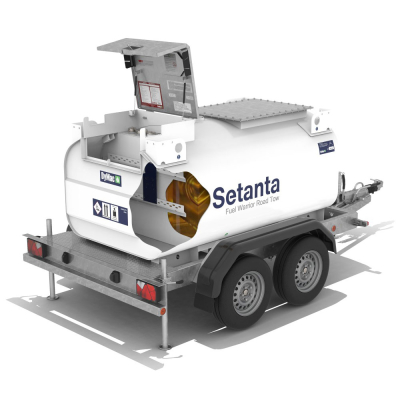
DyMac – SFW-RT-2000L – Setanta Fuel Warrior Road Tow

Contact us for free advice for your sizing, installation, and servicing.
Our extensive range of storage tanks guarantees secure and efficient storage of a variety of fuels and liquids. The range includes versatile towable fuel tanks (bowsers) that make refuelling easy as you can transport fuel to your machinery whenever and wherever it’s needed.
READ MORE... 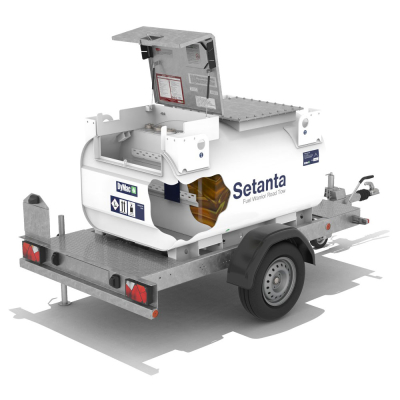
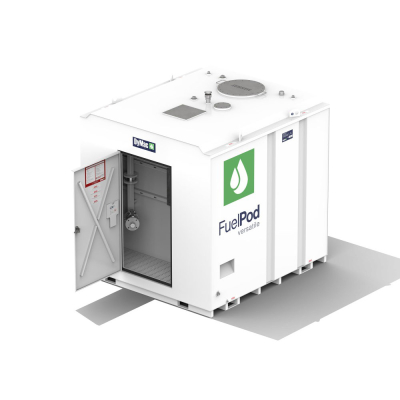
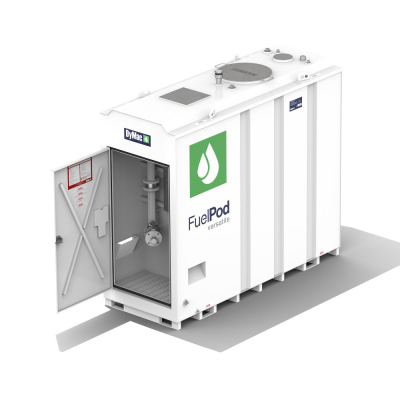
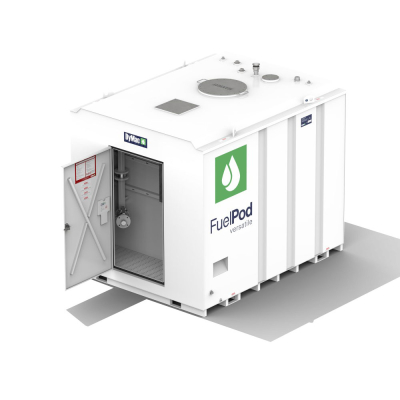


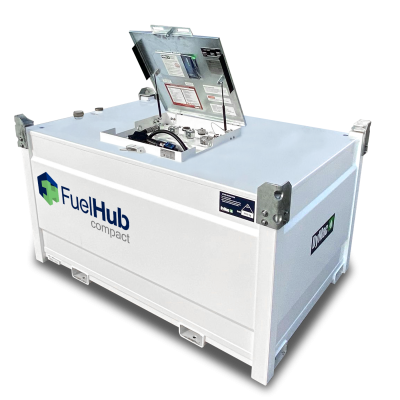
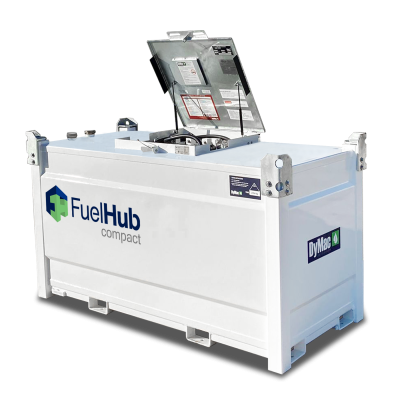

A static fuel storage tank is a fixed, non-mobile tank that stores fuel on-site. Static storage serves jobs where a large volume of fuel needs to be readily available to power vehicles, machinery and equipment.
A static tank might be required for months rather than days or weeks. They are commonly deployed on large construction sites, industrial facilities, and farms.
Key features:
High capacity: Designed to store large fuel volumes – i.e. from several thousand to tens of thousands of litres.
Durable construction: Robustly constructed from quality steel or fibreglass to withstand the elements and last 15 years or longer.
Secondary containment (bunding): Equipped with bunding to prevent fuel leakage or spillage, protecting the environment from contamination.
Ventilation systems: Includes vents to prevent pressure buildup caused by temperature changes and ensure safe storage.
Security: Features such as lockable valves, alarms, and monitoring systems deter theft and unauthorised access.
Underground storage: In some cases, the tank is situated underground.
Explore various tank sizes and specs to find the storage tank that matches your needs.
DyMac – FHC-1000L – FuelHub Compact
Includes:
DyMac – FHC-2000L – FuelHub Compact
Includes:
DyMac – FHC-3000L – FuelHub Compact
Includes:
DyMac – FHC-4000L – FuelHub Compact
Includes:
DyMac – FHC-5800L – FuelHub Compact
Includes:
DyMac – FHC-7800L – FuelHub Compact
Includes:
DyMac – FHC-9750L – FuelHub Compact
Includes:
DyMac – FPV-5200L – FuelPod Versatile
Includes:
DyMac – FPV-8500L – FuelPod Versatile
Includes:
DyMac – FPV-10500L – FuelPod Versatile
Includes:
Towable fuel bowsers (towable diesel fuel tanks) are mobile tanks for storing and transporting fuels. They serve a valuable purpose in refuelling vehicles, generators, and equipment on-site.
Mobile bowsers are designed for transportation and shorter-term use, so they generally have smaller capacities than static modules.
Key characteristics.
Find a mobile fuel solution to power your site.
DyMac – AC-RT-450L – AceCube Road Tow
Includes:
DyMac – ACC-RT-900L – AceCube Compact Road Tow
Includes:
DyMac – AC-RT-950L – AceCube Road Tow
Includes:
DyMac – AC-RT-2000L – AceCube Road Tow
Includes:
DyMac – AC-RT-3000L – AceCube Road Tow
Includes:
DyMac – SFW-RT-1000L – Setanta Fuel Warrior Road Tow
Includes:
Unique bracket system for easy stacking and racking
DyMac – SFW-RT-2000L – Setanta Fuel Warrior Road Tow
Includes:
With a track record of solving power problems proactively and in emergencies, Solent Power is a go-to provider for businesses across the UK.
We offer a large range of environmentally friendly fuel tanks that cater to every storage and refuelling situation. Capacities range from 450L to 10,500L and all units comply fully with regulations.
Our friendly team offers expert advice on sizing, installation, servicing, and more. Let us guide you to the ideal affordable, high-quality storage tank for your requirements.
Here are the average periods that different fuel types last in a tank without deterioration:
Regular fuel testing and additives help to prolong fuel life.
Yes, fuel tanks must be vented to ensure safe and efficient use.
Venting helps to prevent:
Fuel storage tanks are used to safely hold and manage various types of fuels such as petrol, diesel, and oil. They are a secure, convenient way to store fuel for filling cars, tractors, generators, machinery, and equipment in multiple industries.
Popular use cases include:
The two main types of fuel tanks are:
Storage tanks can also be categorized by their material makeup. Tanks are usually made from one or more of the following:
Above-ground storage tanks have an average life expectancy of about 20 years. Underground tanks can last up to 30 years. Longevity for both tank types varies based on factors like their size, location, how they are used, their material make-up, and maintenance.
Fuel tanks are made from:
To maintain a fuel tank, pay attention to the following:
Environmental regulations require fuel products to be labelled properly and stored securely in bunded fuel tanks to prevent spills and contamination. Bunded fuel tanks have a double-layered design to protect against leaks and spills. The bund is required to hold at least 110% of the inner tank’s capacity.
Mobile tanks must comply with the International Carriage of Dangerous Goods Regulations (ADR) governing the safe transport of hazardous products. This includes proper labelling and driver certification.
Here are practical tips to prevent fuel contamination in storage tanks:
As the name implies, an underground tank is concealed from view, below ground, and takes up no surface space. It offers better protection and often lasts longer than surface tanks. However, fitting the tank requires excavation and specialised installation. Once installed it is fixed in that location. The upfront and maintenance costs are typically higher than above-ground units.
Above-ground fuel tanks are easier to maintain and install but are more susceptible to the weather. Some models are mobile which enables refueling in different locations. They are a higher fire risk, but good quality fuel tanks have fire-resistant features.
To clean a fuel tank safely:
Professional services often use advanced methods such as high-pressure washing, chemical treatments, or vacuum pumping to clean comprehensively and efficiently.
The size of the fuel or diesel tank you need depends on several factors, including:





Solent Power Ltd (Company Number 12622565) is a company registered in England and Wales. Our registered office is located at Station yard, Bowes Hill, Rowlands Castle PO9 6BP. VAT No. 363504018